


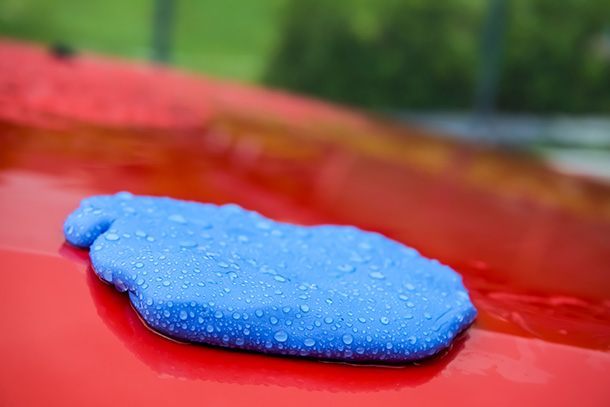
You've probably heard of car clay, otherwise you likely wouldn't be here. But what exactly is car clay? And how does claying your car work and why would you do it? And how do you do it on a truck? In this blog post, we'll explain it all to you! From a step-by-step guide on how to get started to tips for trucks and our recommendations for car clay.
What is car clay?
People with some knowledge of car detailing are certainly familiar with car clay. It's a clay-like substance designed to remove tiny particles and contaminants from a car's paintwork. These particles can stick to the paint's surface due to pollution, brake dust, rail dust, tar, tree sap, and other environmental contaminants. So car clay is a special clay for cleaning paintwork and is not like normal clay. So don't start with a pot of Play-Doh.
Why should you use car clay?
"But why should I use car clay? Can't I just clean the paint with a sponge?" Yes, you can. You can also clean your car or truck with a 'normal' cleaner. Washing your vehicle is a good start, but it's not always enough. Claying goes a step further by removing even the most stubborn dirt, which is essential to keeping the paintwork in top condition. Let's look at reasons why you should use car clay below.
- Paint protection: Regular use of car clay can help protect the car's paint from damage. Contaminants that stick to the surface can, over time, eat into the paint, leading to permanent damage. That would, of course, be a huge waste.
- Restoring smoothness: If these small particles remain on the paint, for example, if you only rinse your vehicle with a garden hose, the paint can feel rough over time and lose its shine. Car clay removes these impurities and restores the smoothness of the paint surface.
- Preparation for detailing: If you plan to polish, wax, or seal your vehicle, claying is an essential first step. By removing contaminants, polishing products, for example, can work better and leave a shinier result.
How to use car clay?
Do you want to get started with car clay? It can be a time-consuming job, but the result is definitely worth it. To begin, you need to gather a few essentials.
Essentials
- Car clay or clay mitt
- A mixture of water and car shampoo
- Wheel Cleaner
- Microfibre cloth
- Wax
Steps to clay your vehicle
-
Remove surface dirt
To start, it's useful to ensure your vehicle is clean of visible dirt and dust. This prevents your clay block from absorbing all this grime, allowing your car clay to last much longer! It's also advisable to work in the shade and not in overly warm weather, otherwise the car shampoo will dry too quickly and you might get stains. To remove metal particles stuck to the paint, you can use a Wheel Cleaner. When you spray the car with Wheel Cleaner, you'll see that all stuck metal particles turn purple. After 1 to 3 minutes, rinse the Wheel Cleaner off your vehicle. By using this product, you've already removed most of the dirt, making it easier to clay! -
Lubricate the surface
For the clay to glide easily over the paint, it's important that the surface is moist. You can use detailing spray for this, or a mixture of water and car shampoo. Make sure the surface always stays wet and don't clay on a dry surface.
-
Using the car clay
Fold the car clay into a flat, manageable shape. Hold the clay firmly and glide it with light pressure over the lubricated surface. It's important to keep the surface well-lubricated during claying to prevent friction and scratches. -
Check regularly and knead the clay
Because the car clay removes dirt from the paint, you occasionally need to knead or fold the clay to continue with a clean piece of clay. Don't continue for too long with a dirty piece of clay, as you might scratch your paint. -
Wipe and wax
Is the surface clean and smooth again? Then wipe away any residue with a clean microfibre cloth. To provide extra protection for your paint and give it a nice shine, you can apply a layer of wax to the paint.
Please note! Remember that car clay is a mild abrasive, so it's important to be careful and follow the manufacturer's instructions. Applying too much pressure during claying can cause scratches.
Tips for claying your truck
So there you are, with a small piece of clay in your hand, looking at your truck. It seems like an impossible task to clay your truck, and we completely understand that. Fortunately, we've gathered some tips below to make the process a bit easier.
- Use a suitable product. For example, you can choose to work with a larger piece of clay. You can also use a clay mitt. This makes cleaning larger surfaces a bit easier.
- Pay close attention to where claying is needed. It's a shame to clay an entire surface if it's not really necessary. Run your hand over the paint and feel if it's rough. If it's not too bad, you can postpone claying for a while.
- Use a ladder. A ladder makes it easier to reach those spots that are otherwise difficult to access. Make sure you use a sturdy ladder; we don't want any accidents, of course!
- Enlist professional help. Don't feel like tackling your truck with a small piece of clay? Or do you want your truck polished, but don't want to do it yourself? Then outsource this and use Truckssupply's truck polishing service! This way, you ensure your truck looks spick and span again, without you having to do anything. Easy, right?


